
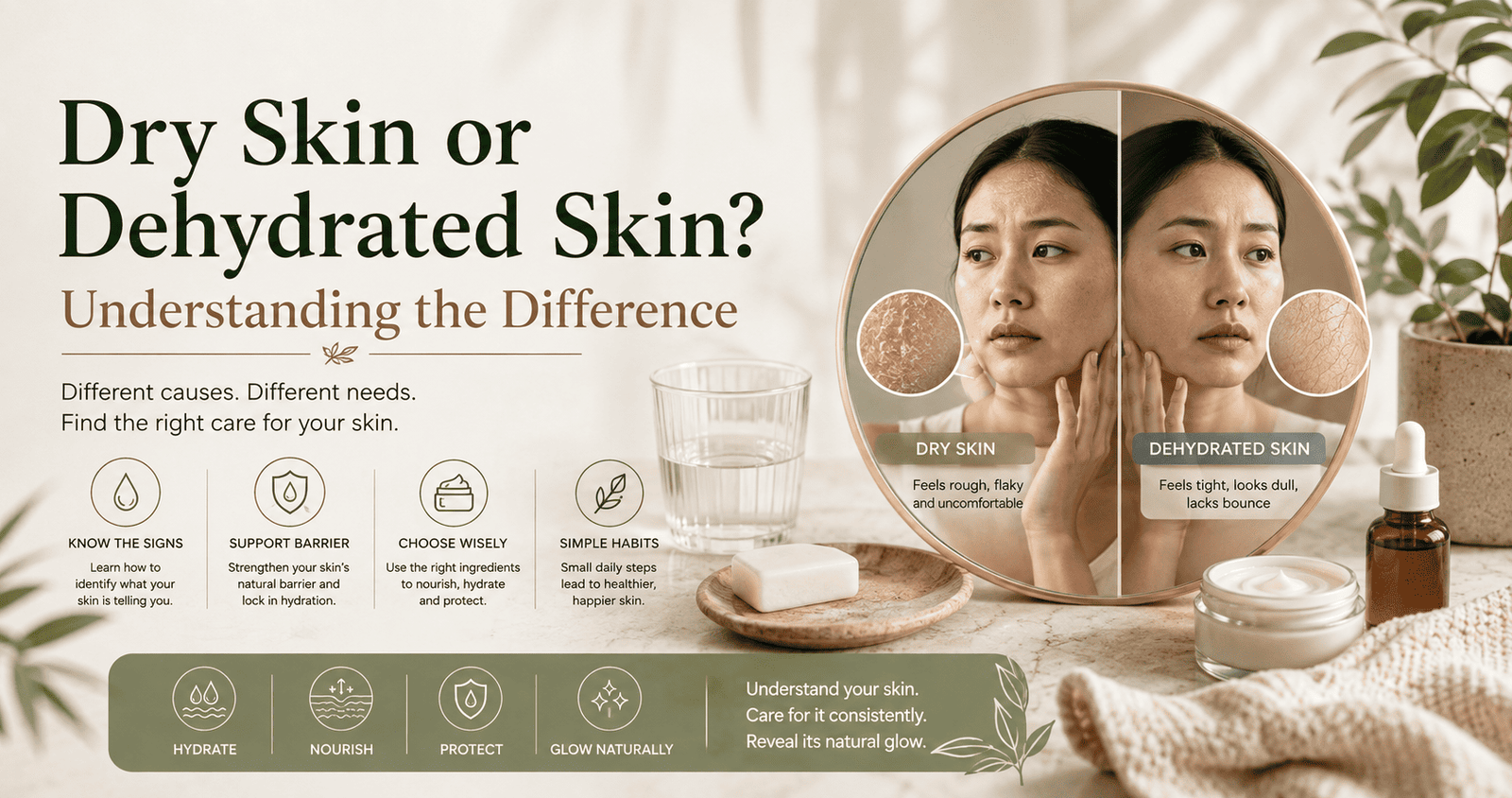
Dry skin and dehydrated skin are often mistaken for the same thing. While they may feel similar, the underlying causes are very different. Knowing the difference is the first step towards choosing a skincare routine that truly works for your skin.
Have you ever stepped out of the shower, applied a generous amount of moisturizer, and still found your skin feeling tight a short while later?
It is easy to assume your skin is simply dry. In reality, that is not always the case.
Many people use the terms dry skin and dehydrated skin interchangeably, but they describe two very different things. Understanding which one you are experiencing can make it much easier to choose products that suit your skin’s needs.
It Is Not Just About Feeling Dry
When we say our skin feels “dry,” we are often describing a sensation rather than the underlying cause.
Dry skin is a skin type. It naturally produces less oil, making it more likely to feel rough, flaky, or uncomfortable throughout the day.
Dehydrated skin, by contrast, is a temporary condition. It occurs when the skin lacks water rather than oil. Because of this, even people with oily or combination skin can experience dehydration.
That is why someone with naturally oily skin may still notice tightness after cleansing or showering.
Although the symptoms can feel similar, the cause and the care your skin needs are quite different.
How Can You Tell the Difference?
Your skin often gives you subtle clues if you know what to look for.
You may have dry skin if it:
- Feels rough or flaky most of the time.
- Rarely feels naturally soft without moisturizer.
- Becomes more uncomfortable during cooler weather or in air conditioned environments.
- Often appears dull because it lacks natural oils.
Your skin may be dehydrated if it:
- Feels tight after washing.
- Looks tired or lacks its usual radiance.
- Develops fine lines that seem more noticeable when it feels dehydrated.
- Feels oily on the surface but uncomfortable underneath.
It is also possible to experience both at the same time.
Although many people first notice these signs on their face, dryness and dehydration can affect the rest of the body just as easily. Areas such as the arms, legs, elbows, and knees are equally prone to moisture loss and deserve the same level of care.
Everyday Habits Can Make a Difference
Dehydrated skin is not always caused by the weather.
In many cases, it is the result of everyday habits that gradually reduce the skin’s moisture.
Long, hot showers, frequent cleansing, prolonged sun exposure, spending hours in air conditioned environments, and simply not drinking enough water can all contribute.
This is especially common in tropical climates. Although the outdoor air may feel humid, many of us spend most of the day moving between air conditioned homes, offices, shopping centres, and cars. Over time, these environments can leave the skin feeling less hydrated than you might expect.
What Does Your Skin Actually Need?
Once you understand whether your skin lacks oil or water, choosing the right routine becomes much easier.
If you have naturally dry skin, look for products that contain nourishing ingredients such as olive oil, shea butter, ceramides, or other plant based oils. These ingredients help replenish the skin’s natural lipids and reduce moisture loss.
If your skin is dehydrated, ingredients known as humectants, such as glycerin and hyaluronic acid, help attract water into the skin’s outer layers. They work best when paired with nourishing ingredients such as ceramides, shea butter, or plant based oils, which help support the skin’s natural barrier and reduce moisture loss.
A healthy skin barrier helps slow transepidermal water loss, allowing the skin to retain moisture more effectively and feel comfortable for longer.
Choosing the right ingredients is only part of the solution. How and when you use them matters just as much.
As we explored in our article, The 3 Minute Rule: Why Moisturizing Right After a Shower Matters, applying moisturizer while your skin is still slightly damp helps reduce moisture loss and allows your skin to retain hydration more effectively.
Building a Simple Body Care Routine
Looking after your skin does not have to be complicated.
A few consistent habits are often all it takes.
Start with a gentle cleanser that leaves your skin feeling clean without leaving it feeling tight or uncomfortable afterwards. Mineral rich products such as Juman Dead Sea Mud Soap and Juman Olive Oil Soap gently cleanse while helping maintain the skin’s natural moisture balance.
Once or twice a week, gently exfoliate using Juman Dead Sea Body Scrub. Removing the buildup of dead skin cells allows moisturizer to spread more evenly while leaving the skin feeling smoother, softer, and better prepared to retain hydration.
Finish by applying a nourishing moisturizer while your skin is still slightly damp, ideally within a few minutes of stepping out of the shower.
A Simple Reminder
If you are not sure where to begin, these simple habits provide a good foundation for caring for your skin every day.
- Understand whether your skin needs more oil or more hydration.
- Cleanse gently without over washing.
- Exfoliate once or twice a week, depending on your skin type.
- Moisturize while your skin is still slightly damp.
- Drink enough water and protect your skin from excessive sun exposure.
Healthy Skin Begins with Understanding
No single skincare routine works for everyone because every person’s skin is different.
Understanding whether your skin needs more nourishment or more hydration is often the first step towards choosing products that truly suit your needs.
Healthy looking skin rarely comes from a single product alone. More often, it is the result of understanding what your skin needs, making thoughtful choices, and following a routine consistently over time.
The better you understand your skin, the easier it becomes to give it the care it truly needs.