SLS-free, paraben-free, allergy-tested, vegan, and halal-certified. You may find several of these descriptions on the same soap box, although they tell you different things.
Some describe ingredients that have been excluded. Others refer to testing or certification. Understanding these distinctions can help you decide which details matter when choosing a skincare product.
SLS-Free: What Has Been Left Out?
SLS stands for sodium lauryl sulphate, a cleansing ingredient that helps remove oil and dirt.
An SLS-free product does not contain this particular ingredient, although it may contain other cleansing agents. Whether the product feels gentle on your skin depends on its complete formulation.
If you have sensitive skin, the SLS-free label is only one piece of information to consider.
Does Paraben-Free Mean Safer?
Parabens are preservatives used to help prevent microbial growth in cosmetic products. A product made without them may use alternative preservatives or a formulation that requires a different approach to preservation.
The important consideration is whether the finished product remains safe and adequately protected against microbial contamination throughout its intended use.
Simply excluding parabens does not establish that a product is safer.
A Closer Look at “Allergy-Tested”
When a product is described as allergy-tested, it is worth understanding what the testing involved.
The description alone does not tell you how many people participated, what was assessed, or what the results showed. These details help explain what the claim actually supports.
Even a tested product may cause a reaction in someone with a sensitivity to a particular ingredient. Allergy-tested does not mean allergy-free.
Vegan and Halal: Two Different Considerations
A vegan claim generally concerns the absence of animal-derived ingredients. Some standards also include requirements relating to manufacturing practices.
Halal certification follows a separate set of requirements covering ingredients, manufacturing, and handling.
A vegan product is not automatically halal-certified, and a halal-certified product may contain ingredients that are unsuitable for vegans.
If certification matters to you, look for a recognised certification mark and confirm that it applies to the specific product you intend to purchase.
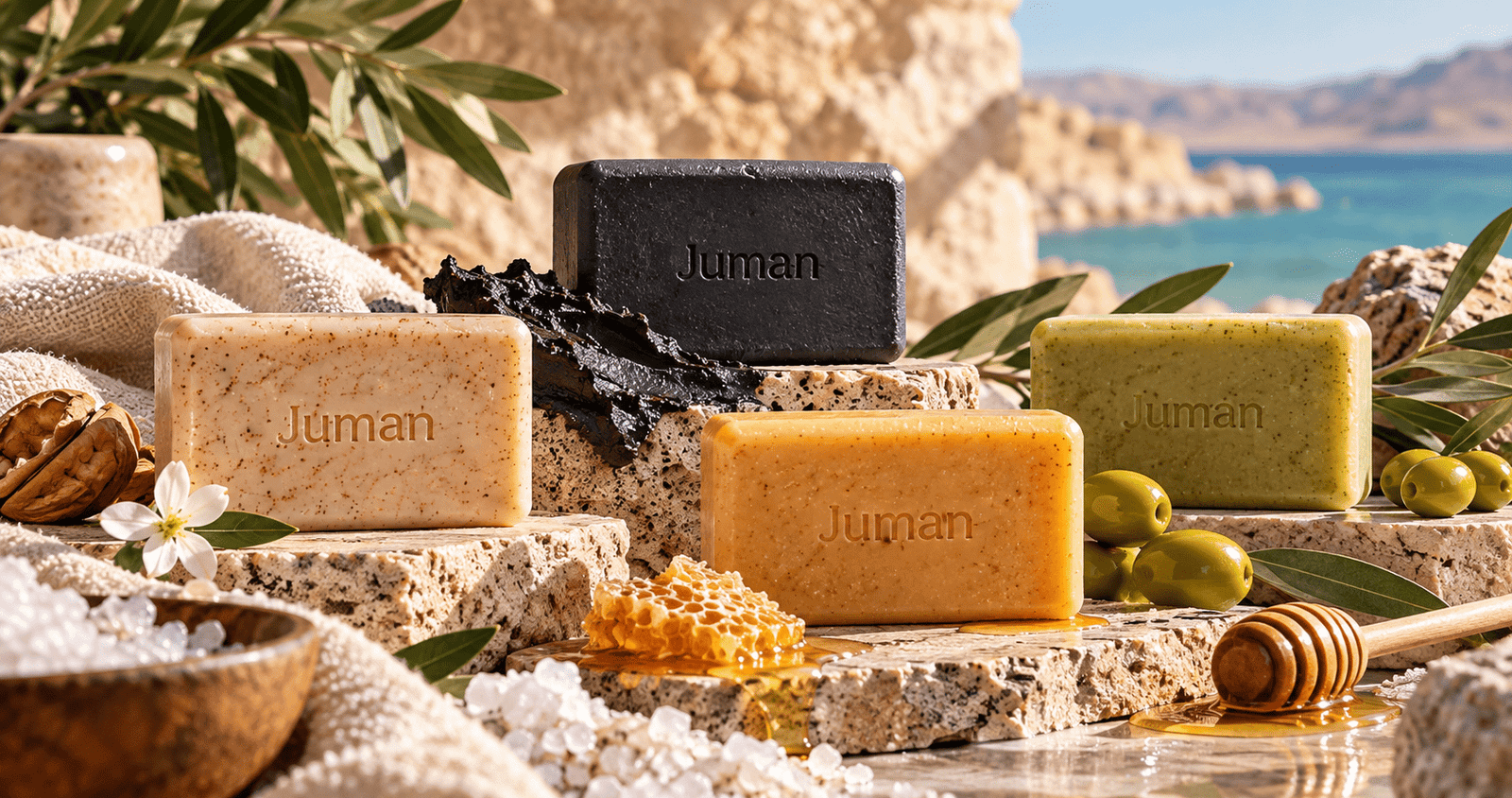
Watch the JUMAN Dead Sea Soap Collection
The short video below introduces several JUMAN Dead Sea soaps and highlights descriptions including SLS-free, paraben-free, allergy-tested, vegan, and halal-certified.
The video also includes claims about removing dead skin cells and unclogging pores. These concern product performance and require evidence relevant to the claimed effects. An ingredient exclusion or certification does not, by itself, establish those benefits.
What Should You Check Before Buying?
Start with the information that matters most to you.
If you are avoiding a particular ingredient, read the ingredient list. If you are looking for a certified product, check the certification details. For testing or performance claims, look for information explaining what was assessed and what the findings support.
If the packaging does not provide enough information, ask the manufacturer or seller for clarification before making your decision.
Explore the JUMAN Dead Sea soap collection in Malaysia through MyTradeMartStore.
Disclosure: JUMAN Dead Sea products are imported and distributed in Malaysia by Relev Tech Sdn. Bhd., which also operates MyTradeMartStore and Glovelle.