
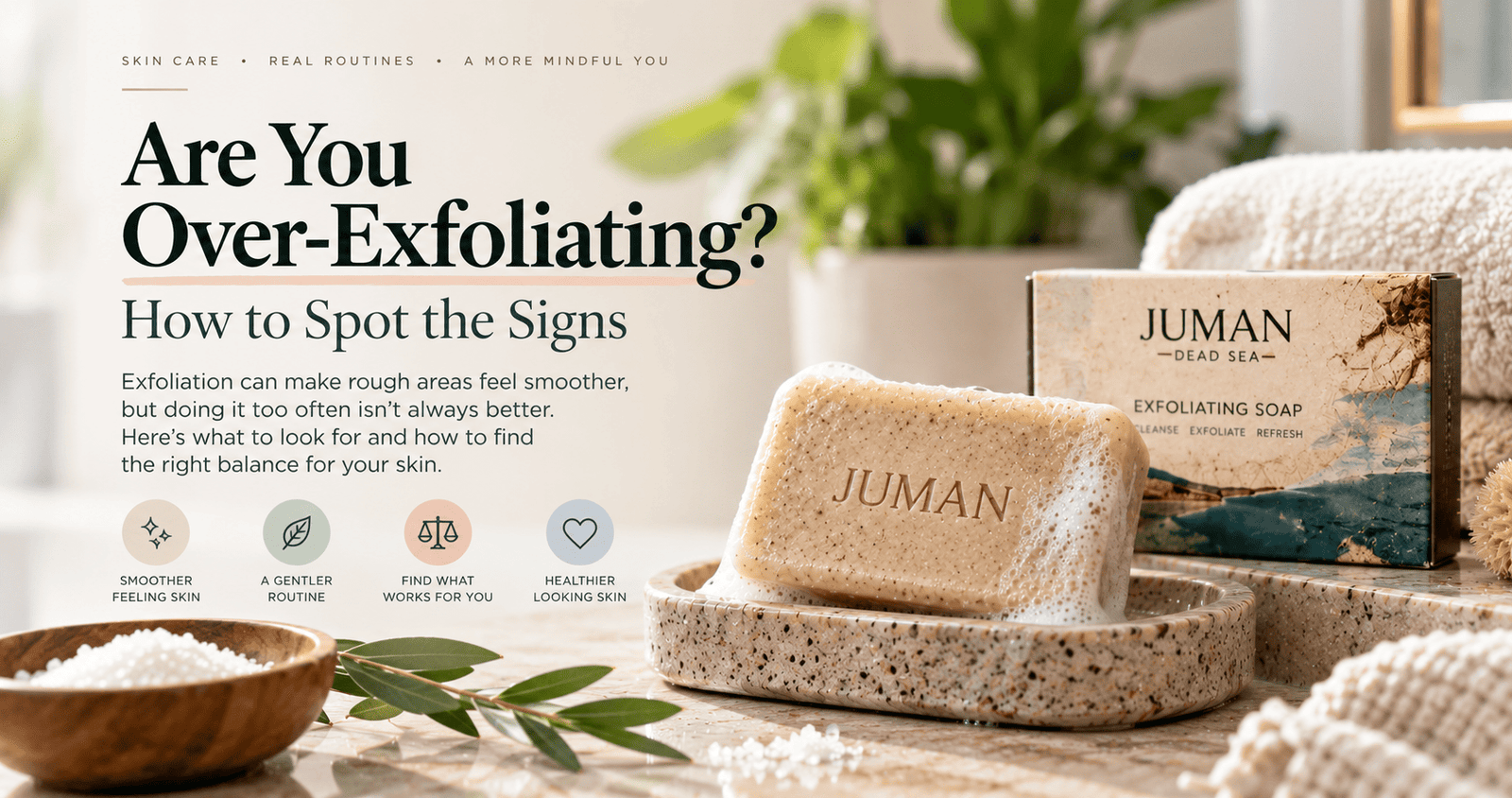
Exfoliation can make rough areas of the body feel smoother, so it may seem reasonable to exfoliate more often when you like the result.
However, exfoliating more often or scrubbing harder can irritate the skin instead of improving how it feels.
Using an exfoliating soap, body scrub, exfoliating glove, or another exfoliating product too frequently or too aggressively can leave the skin feeling dry, tender, or irritated. How often you can comfortably exfoliate also varies from person to person.
Rather than relying on a fixed exfoliation schedule, pay attention to how your skin feels during and after exfoliation.
What Does Exfoliation Actually Remove?
Dead skin cells are naturally shed from the surface of the skin. Exfoliation helps remove some of the cells that remain, which can make rough areas feel smoother.
However, exfoliating more frequently or applying greater pressure can irritate the skin instead of improving how it feels.
If your skin becomes irritated or uncomfortable after exfoliation, give it time to recover before exfoliating the area again.
Different Areas of Your Body May Respond Differently
The skin on your elbows may feel quite different from the skin on your chest or upper arms. One area may tolerate exfoliation comfortably, while another may become dry or irritated more easily.
For this reason, a fixed schedule for exfoliating the entire body may not suit everyone.
Consider the area you are exfoliating and how it feels afterwards rather than assuming every part of your body needs the same frequency or pressure.
Where Does an Exfoliating Soap Fit?
An exfoliating soap combines cleansing and exfoliation in the same step.
The short video below features JUMAN Exfoliating Soap and shows the product as an example of an exfoliating cleansing bar.
JUMAN Exfoliating Soap combines exfoliation with the cleansing step.
Because the exfoliating element is already incorporated into the bar, it is worth considering whether you are using other exfoliating products on the same area. For example, using an exfoliating soap together with a body scrub or exfoliating glove during the same shower may increase the amount of exfoliation your skin receives.
You don’t necessarily need to use several exfoliating products during the same shower.
Signs You May Be Exfoliating Too Often
Changes in how your skin normally feels can indicate that your current exfoliation routine may be too frequent or too aggressive.
Watch for:
- Redness that persists after exfoliating
- Stinging or tenderness during or after washing
- Unusual tightness or dryness
- Increased sensitivity in an area that is normally comfortable
- Irritation that continues after you have finished washing
These signs can have different causes, so experiencing one of them does not necessarily mean exfoliation is responsible. However, if the same symptoms repeatedly appear after you exfoliate, consider reducing how often you exfoliate or how much pressure you apply.
Avoid responding to irritation by scrubbing harder or exfoliating more frequently.
If irritation persists, becomes severe, or you are concerned about an ongoing skin problem, seek advice from an appropriate healthcare professional.
What About Oily or Bumpy Skin?
Having oily skin doesn’t automatically mean you need to exfoliate more frequently. Sebum is naturally produced by the skin, and increasing exfoliation isn’t a direct way to control how much sebum your skin produces.
Bumpy or uneven skin also needs to be considered carefully.
Not every bump or change in skin texture has the same cause. Dead skin cells may contribute to some forms of uneven texture, but persistent bumps, itching, redness, or inflammation shouldn’t automatically be treated by exfoliating more often.
The same caution applies to claims about “unclogging pores.” Exfoliation can remove dead skin cells from the surface, but this doesn’t mean that an exfoliating soap will resolve every type of bump or pore-related concern.
Do You Need a Body Scrub as Well?
Not necessarily.
An exfoliating soap combines cleansing and exfoliation in one product. A separate body scrub allows you to keep exfoliation as a separate step and decide when you want to include it in your routine.
If you are already using an exfoliating soap, consider whether you also need a scrub on the same area during the same shower.
Using two exfoliating products together doesn’t automatically make exfoliation more effective. It simply exposes the skin to additional exfoliation.
If you prefer using both products, they don’t necessarily have to be used during the same shower.
Finding a Frequency That Works for You
Begin with the directions provided with the product. They are the appropriate starting point for how that particular product is intended to be used.
Then notice how your skin feels after using it. If your skin remains comfortable, continue following the product directions. If you repeatedly experience dryness, soreness, stinging, or irritation after exfoliating, reduce how often you exfoliate and allow the affected area time to recover.
There is no need to match another person’s exfoliation schedule. How frequently you exfoliate should take into account the product you are using and how your own skin responds to it.
JUMAN Exfoliating Soap is available in Malaysia through MyTradeMartStore.
Disclosure: JUMAN Dead Sea products are imported and distributed in Malaysia by Relev Tech Sdn. Bhd. Relev Tech also operates MyTradeMartStore and Glovelle.