
Body soaps come at very different prices. Some cost only a few ringgit, while others are marketed as premium skincare products.
A higher price may reflect ingredients, packaging, branding, or manufacturing costs. But does paying more necessarily mean you are getting a better soap?
The answer depends on more than the price printed on the packaging.
What Influences the Price of Body Soap?
The retail price of a soap reflects several costs beyond its ingredients.
Manufacturing processes, packaging materials, transportation, marketing, and retail margins all contribute to the final selling price.
For example, a soap packaged in a decorative box may cost more than one sold in a simple wrapper. However, the additional packaging cost does not necessarily mean the soap performs better during washing.
Some formulations also use more expensive ingredients or manufacturing methods, although higher production costs do not automatically translate into better results for every skin type.
Does a Higher Price Mean Gentler Cleansing?
Not necessarily.
Body soaps contain cleansing ingredients that help remove dirt, sweat, and surface oils. However, the way these ingredients are combined can affect how a soap feels during and after washing.
A more expensive soap may offer a particular fragrance, texture, or combination of ingredients. These features can influence personal preference, but they do not guarantee gentler cleansing.
If a soap regularly leaves your skin feeling tight, itchy, or uncomfortable, it may not be suitable for you, regardless of how much it costs.
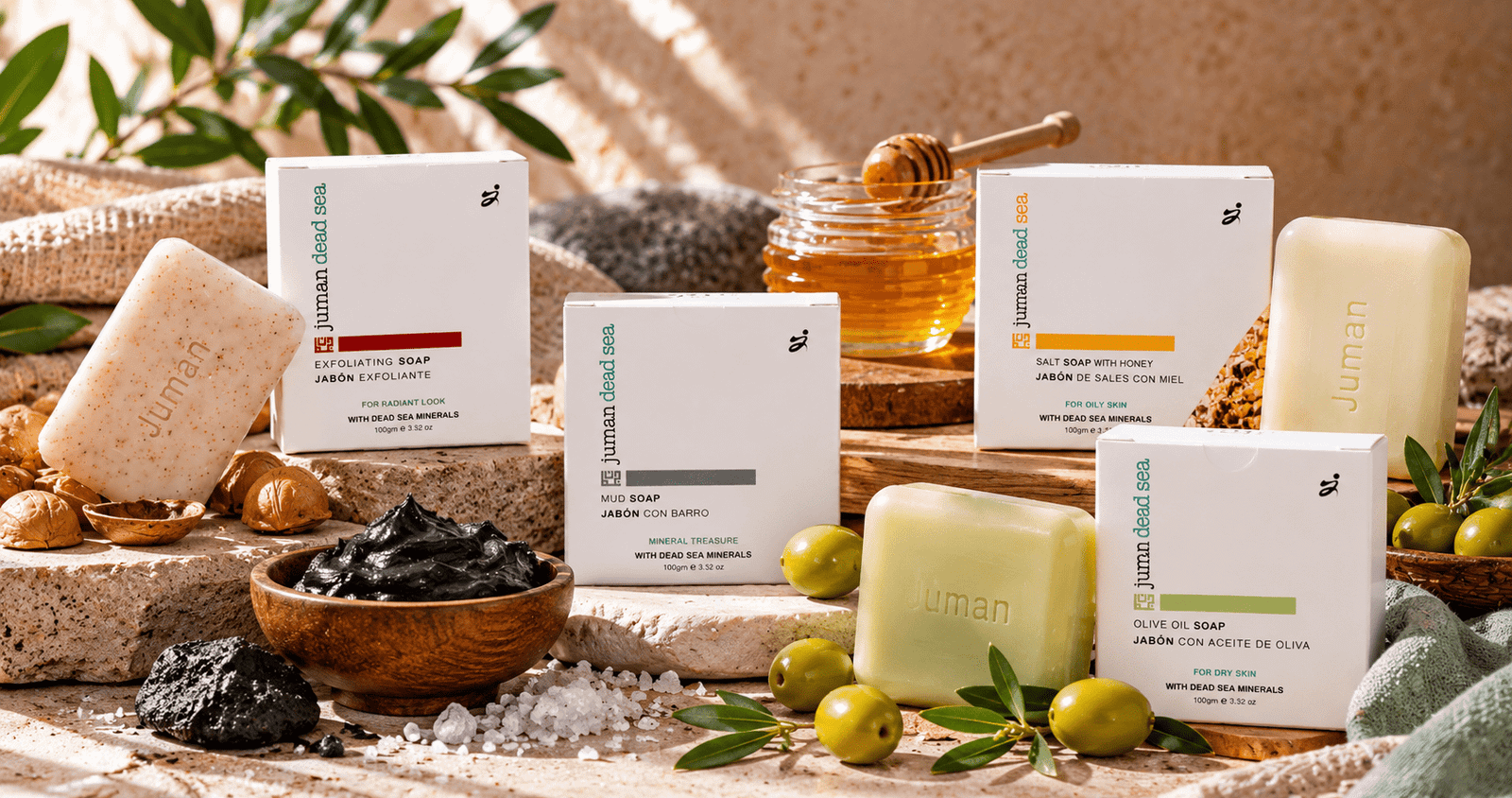
JUMAN Dead Sea Soaps at RM19.50
The video below features four JUMAN Dead Sea soaps available in Malaysia, with a stated retail price of RM19.50 per 100 g bar.
The collection includes Olive Oil Soap, Salt & Honey Soap, Exfoliating Soap, and Mud Soap. Although all four share the same retail price, their formulations differ.
Their ingredients and intended uses are worth considering when choosing between them, rather than relying on price alone.
How Can You Tell Whether a Soap Offers Good Value?
One way to compare soaps is to look at the cost relative to their weight.
For example, a 100 g soap priced at RM19.50 costs RM19.50 per 100 g. Comparing products on the same weight basis can help you see whether a larger bar offers better value.
How long a soap lasts also matters. A bar that is stored properly and allowed to dry between uses may last longer than one left sitting in water.
Most importantly, consider whether the soap suits your skin and how often you intend to use it. A product that causes discomfort or goes unused is unlikely to represent good value, even if it was inexpensive.
Explore the four JUMAN Dead Sea soaps available in Malaysia through MyTradeMartStore.
Disclosure: JUMAN Dead Sea products are imported and distributed in Malaysia by Relev Tech Sdn. Bhd., which also operates MyTradeMartStore and Glovelle.